Recording daily acts of kindness.
Recording daily acts of kindness.
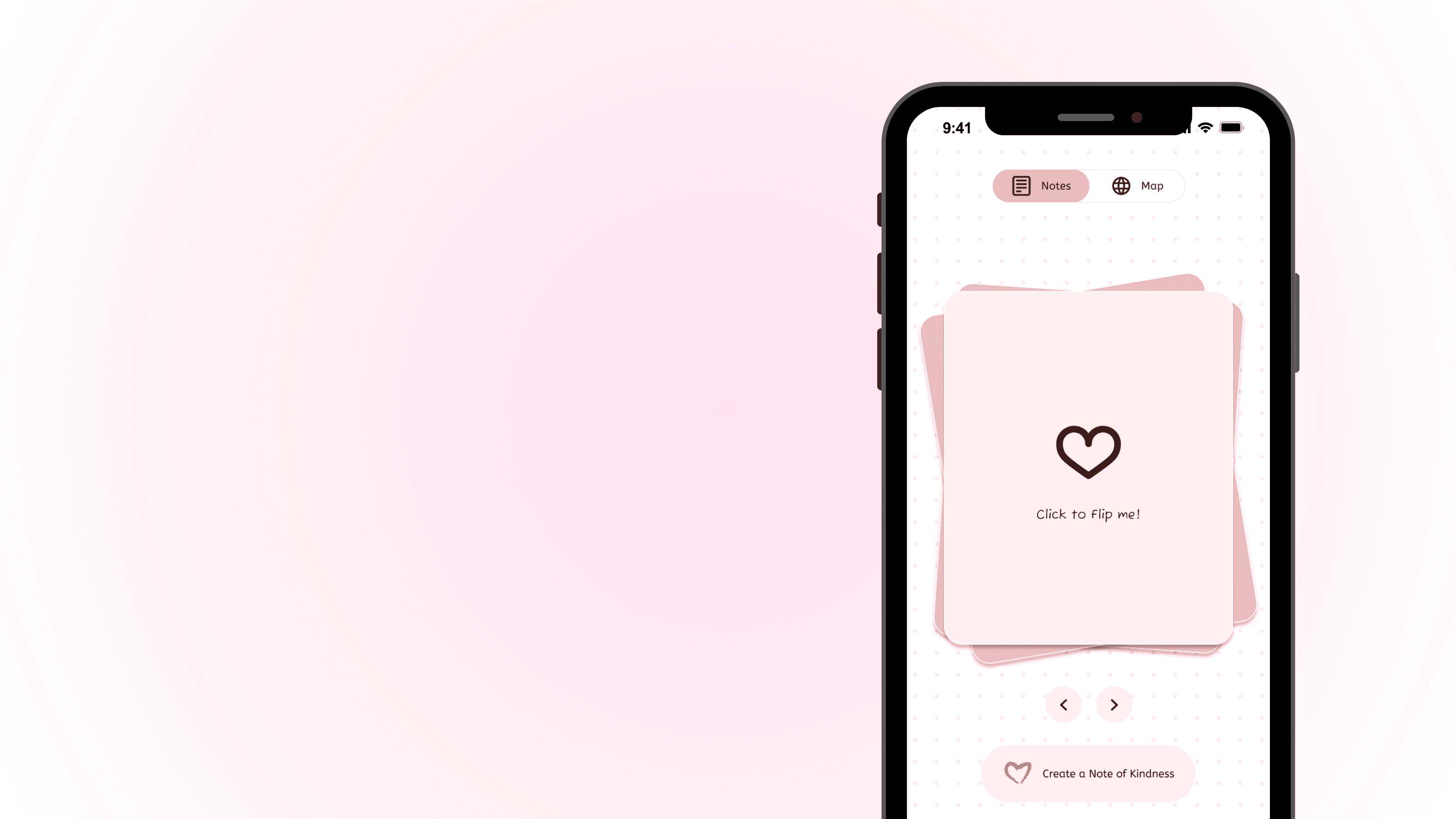
KindSight is an app design that offers a concrete way to make a user’s day better by providing a simple, anonymous social media feed with only positivity.
KindSight is an app design that offers a concrete way to make a user’s day better by providing a simple, anonymous social media feed with only positivity.
mobile app
mobile app
designathon
designathon
project
project
Recording daily acts of kindness.
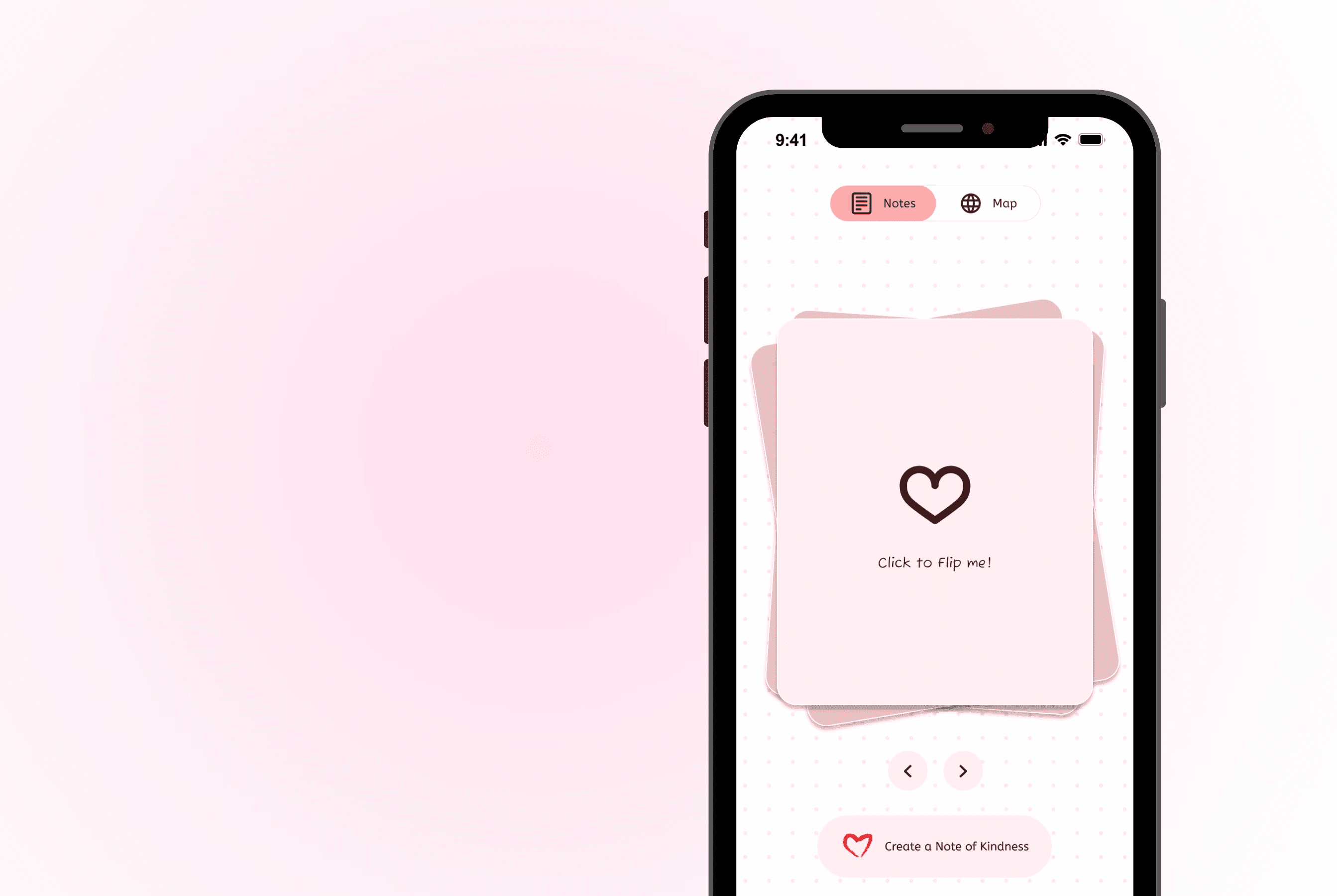
KindSight is an app design that offers a concrete way to make a user’s day better by providing a simple, anonymous social media feed with only positivity.
mobile app
designathon
project

Recording daily acts of kindness.
KindSight is an app design that offers a concrete way to make a user’s day better by providing a simple, anonymous social media feed with only positivity.
mobile app
designathon
project
Promoting well-being in the modern age through recognizing kindness.
Promoting well-being in the modern age through recognizing kindness.
Our team of three designers and UX researchers participated in the UC San Diego DesignCo Designathon to create a solution for the given prompt: “Design a way to promote well-being in the modern age.” In the 7-hour time period we were given, we conducted research on potential focus areas, identified a specific problem and solution, created high-fidelity prototypes, and presented our product.
The digital solution we created is KindSight, a joyful micro-journaling app that lets users record and share acts of kindness they see, do, or receive through short notes or photos. With a map and home feed, users anonymously spread positivity, "add a smile" to posts, and discover goodness happening all around them.
Our team of three designers and UX researchers participated in the UC San Diego DesignCo Designathon to create a solution for the given prompt: “Design a way to promote well-being in the modern age.” In the 7-hour time period we were given, we conducted research on potential focus areas, identified a specific problem and solution, created high-fidelity prototypes, and presented our product.
The digital solution we created is KindSight, a joyful micro-journaling app that lets users record and share acts of kindness they see, do, or receive through short notes or photos. With a map and home feed, users anonymously spread positivity, "add a smile" to posts, and discover goodness happening all around them.
Our team of three designers and UX researchers participated in the UC San Diego DesignCo Designathon to create a solution for the given prompt: “Design a way to promote well-being in the modern age.” In the 7-hour time period we were given, we conducted research on potential focus areas, identified a specific problem and solution, created high-fidelity prototypes, and presented our product.
The digital solution we created is KindSight, a joyful micro-journaling app that lets users record and share acts of kindness they see, do, or receive through short notes or photos. With a map and home feed, users anonymously spread positivity, "add a smile" to posts, and discover goodness happening all around them.
my role
my role
my role
Designer, UX Researcher
Designer, UX Researcher
Designer, UX Researcher
timeline
timeline
timeline
May 9-10, 2025, 7 hours total.
May 9-10, 2025, 7 hours total.
May 9-10, 2025, 7 hours total.
tools and methods
tools and methods
tools and methods
Figma, FigJam, FigmaDraw, Pen and Paper, User Research, User Personas, Competitive Analysis, Prototyping.
Figma, FigJam, FigmaDraw, Pen and Paper, User Research, User Personas, Competitive Analysis, Prototyping.
Figma, FigJam, FigmaDraw, Pen and Paper, User Research, User Personas, Competitive Analysis, Prototyping.
key deliverables
key deliverables
key deliverables
Mobile app design prototype.
Mobile app design prototype.
Mobile app design prototype.
01. identifying the problem space
01. identifying the problem space
01. identifying the problem space
initial research
After brainstorming using FigJam, we decided to focus our problem space on emotional well-being in the modern age. In particular, we explored how this may be negatively impacted by modern social media, especially in the local San Diego area. To better understand the psychological and social effects of digital platforms, we conducted initial research using credible sources such as Pew Research and UC Riverside studies. We found that negative content on social media spreads 63% faster than positive content, leading to skewed worldviews and increased psychological distress. In contrast, studies from UC Riverside show that regularly witnessing or recording kind acts can significantly reduce symptoms of anxiety. Additional research highlighted how exposure to kindness increases the likelihood of paying it forward by up to 25%. These insights helped us identify a powerful yet underutilized opportunity: using digital media to amplify real-world positivity.
problem space
Social media platforms, though intended to build connection, often contribute to users' psychological distress by amplifying negativity, fostering comparison, and enabling harassment. We aim to reimagine digital engagement as a space that nurtures emotional well-being and strengthens local communities.
Our Solution
We designed KindSight, a location-based app that allows users in San Diego to share and discover real acts of kindness happening around them. The app promotes emotional well-being through a feed centered on positive, community-driven content.
initial research
After brainstorming using FigJam, we decided to focus our problem space on emotional well-being in the modern age. In particular, we explored how this may be negatively impacted by modern social media, especially in the local San Diego area. To better understand the psychological and social effects of digital platforms, we conducted initial research using credible sources such as Pew Research and UC Riverside studies. We found that negative content on social media spreads 63% faster than positive content, leading to skewed worldviews and increased psychological distress. In contrast, studies from UC Riverside show that regularly witnessing or recording kind acts can significantly reduce symptoms of anxiety. Additional research highlighted how exposure to kindness increases the likelihood of paying it forward by up to 25%. These insights helped us identify a powerful yet underutilized opportunity: using digital media to amplify real-world positivity.
problem space
Social media platforms, though intended to build connection, often contribute to users' psychological distress by amplifying negativity, fostering comparison, and enabling harassment. We aim to reimagine digital engagement as a space that nurtures emotional well-being and strengthens local communities.
Our Solution
We designed KindSight, a location-based app that allows users in San Diego to share and discover real acts of kindness happening around them. The app promotes emotional well-being through a feed centered on positive, community-driven content.
initial research
After brainstorming using FigJam, we decided to focus our problem space on emotional well-being in the modern age. In particular, we explored how this may be negatively impacted by modern social media, especially in the local San Diego area. To better understand the psychological and social effects of digital platforms, we conducted initial research using credible sources such as Pew Research and UC Riverside studies. We found that negative content on social media spreads 63% faster than positive content, leading to skewed worldviews and increased psychological distress. In contrast, studies from UC Riverside show that regularly witnessing or recording kind acts can significantly reduce symptoms of anxiety. Additional research highlighted how exposure to kindness increases the likelihood of paying it forward by up to 25%. These insights helped us identify a powerful yet underutilized opportunity: using digital media to amplify real-world positivity.
problem space
Social media platforms, though intended to build connection, often contribute to users' psychological distress by amplifying negativity, fostering comparison, and enabling harassment. We aim to reimagine digital engagement as a space that nurtures emotional well-being and strengthens local communities.
Our Solution
We designed KindSight, a location-based app that allows users in San Diego to share and discover real acts of kindness happening around them. The app promotes emotional well-being through a feed centered on positive, community-driven content.
initial research
After brainstorming using FigJam, we decided to focus our problem space on emotional well-being in the modern age. In particular, we explored how this may be negatively impacted by modern social media, especially in the local San Diego area. To better understand the psychological and social effects of digital platforms, we conducted initial research using credible sources such as Pew Research and UC Riverside studies. We found that negative content on social media spreads 63% faster than positive content, leading to skewed worldviews and increased psychological distress. In contrast, studies from UC Riverside show that regularly witnessing or recording kind acts can significantly reduce symptoms of anxiety. Additional research highlighted how exposure to kindness increases the likelihood of paying it forward by up to 25%. These insights helped us identify a powerful yet underutilized opportunity: using digital media to amplify real-world positivity.
problem space
Social media platforms, though intended to build connection, often contribute to users' psychological distress by amplifying negativity, fostering comparison, and enabling harassment. We aim to reimagine digital engagement as a space that nurtures emotional well-being and strengthens local communities.
Our Solution
We designed KindSight, a location-based app that allows users in San Diego to share and discover real acts of kindness happening around them. The app promotes emotional well-being through a feed centered on positive, community-driven content.
02. user research
02. user research
02. user research
User personas
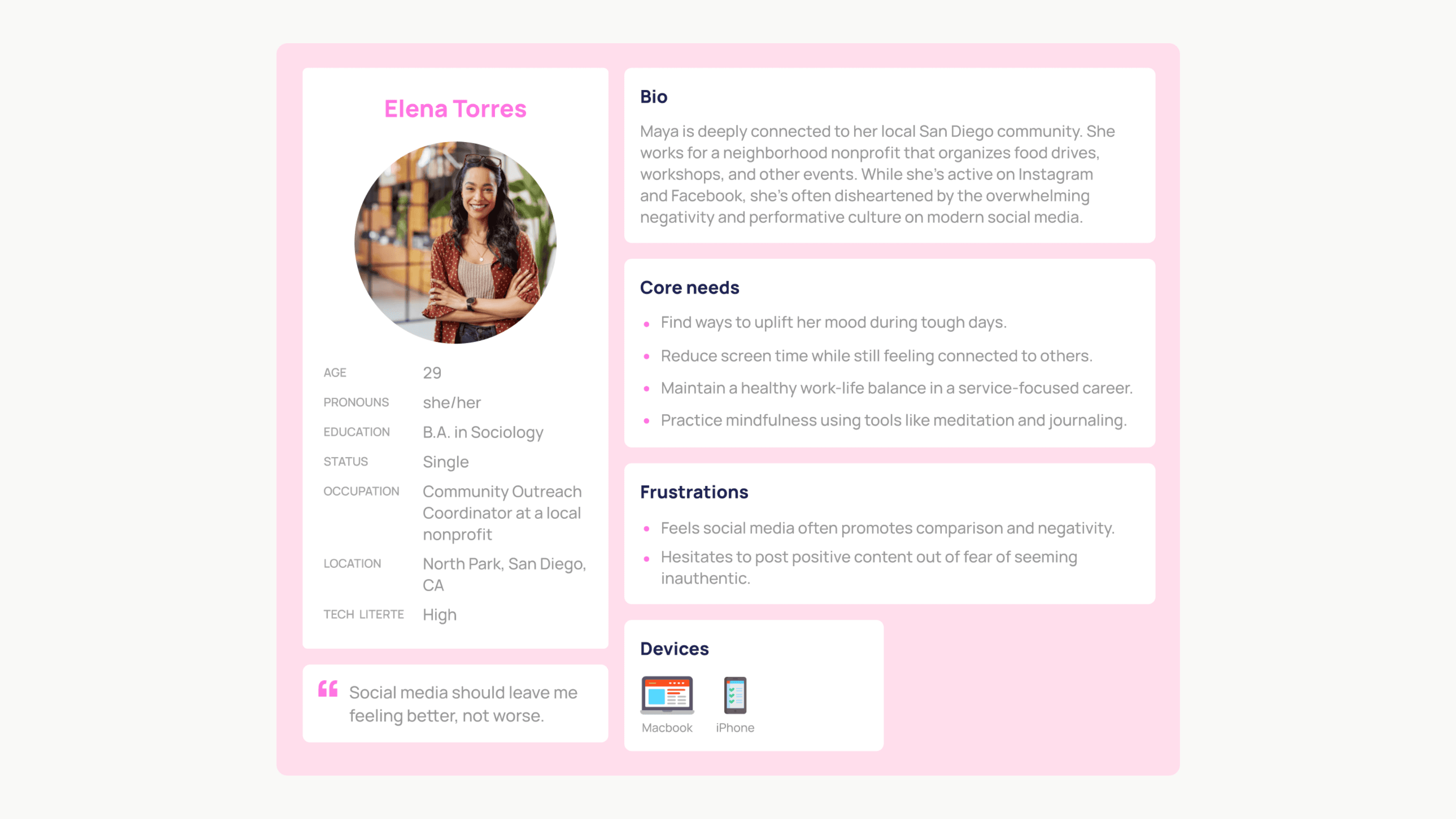
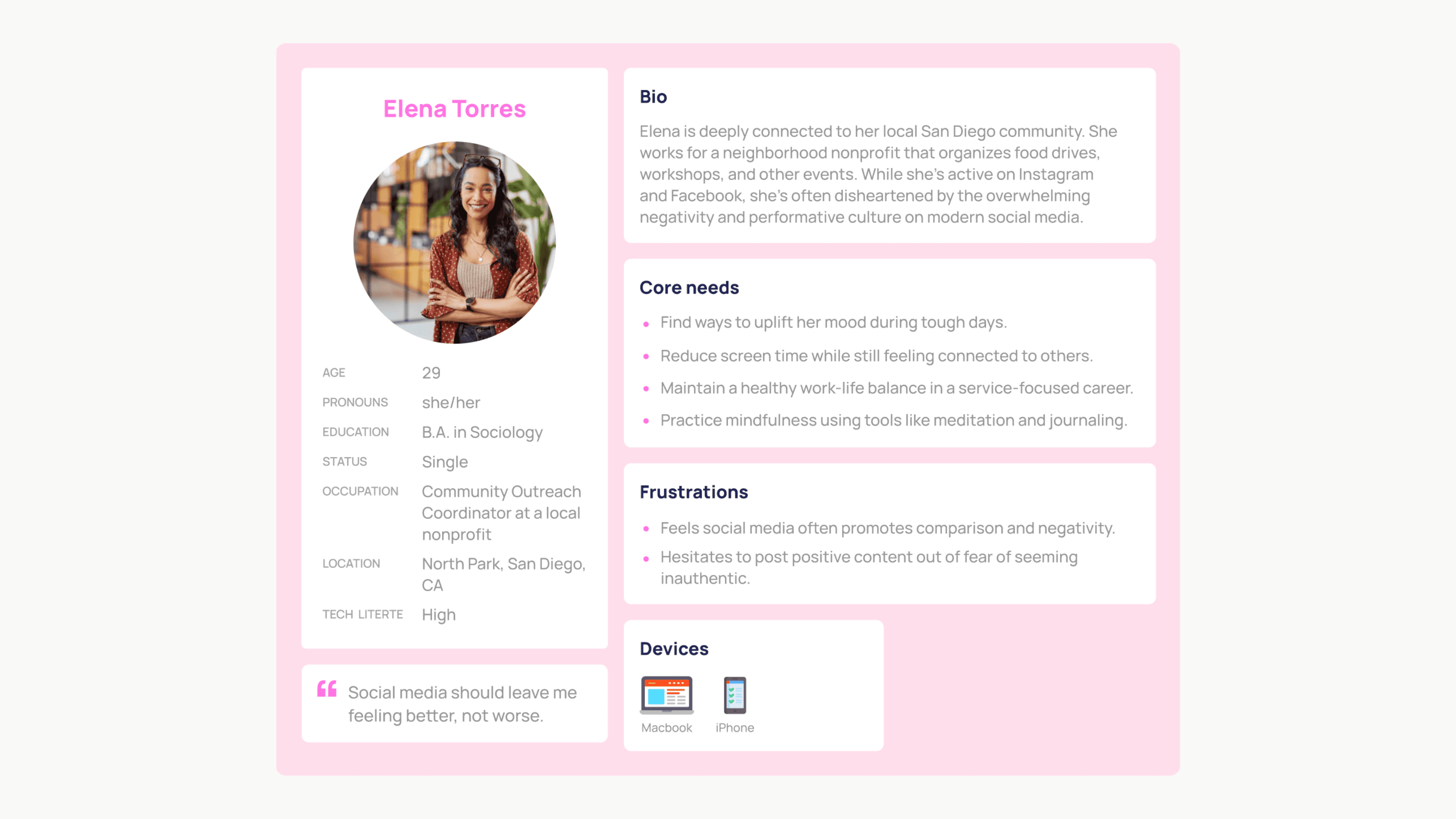
To identify and envision our target audience, we created a user persona of what a typical user of the app may be like.
User personas
To identify and envision our target audience, we created a user persona of what a typical user of the app may be like.
user personas
To identify and envision our target audience, we created a user persona of what a typical user of the app may be like.
user personas
To identify and envision our target audience, we created a user persona of what a typical user of the app may be like.
competitive analysis
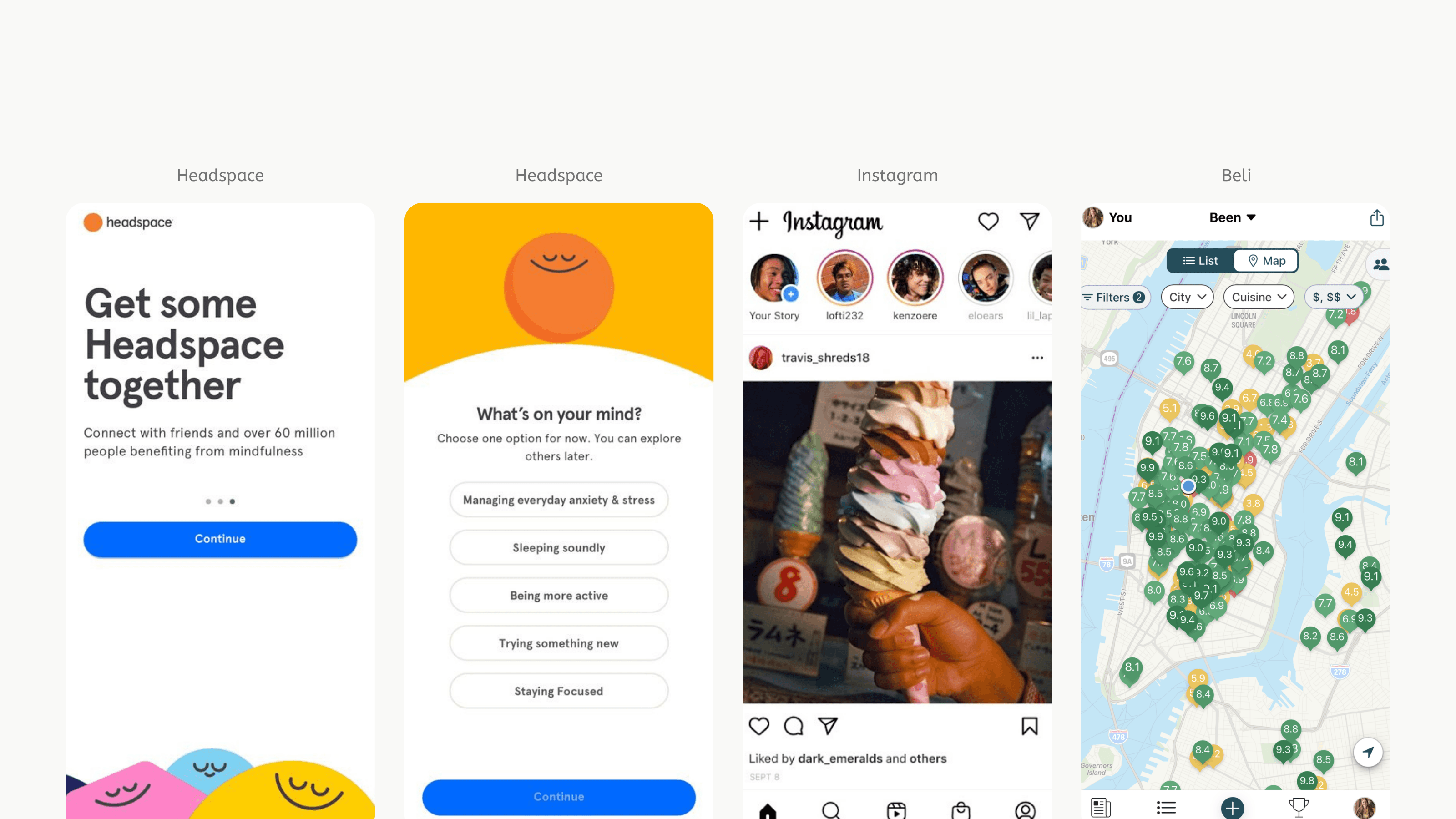
We explored design layouts of several other apps that focused on social engagement, community-building, or mental wellness. For each of these competitors, we noted several aspects:
Color palettes: Intentional color combinations were chosen to highlight each app’s values and purpose.
Location awareness: Many apps utilized localized content to make user feeds feel personally relevant.
Social rating: Several apps include social rating systems such as being able to “like” another post. We wanted to include this method of acknowledgement, but take away any possibility of judgement or performative tendencies.
competitive analysis
We explored design layouts of several other apps that focused on social engagement, community-building, or mental wellness. For each of these competitors, we noted several aspects:
Color palettes: Intentional color combinations were chosen to highlight each app’s values and purpose.
Location awareness: Many apps utilized localized content to make user feeds feel personally relevant.
Social rating: Several apps include social rating systems such as being able to “like” another post. We wanted to include this method of acknowledgement, but take away any possibility of judgement or performative tendencies.
competitive analysis
We explored design layouts of several other apps that focused on social engagement, community-building, or mental wellness. For each of these competitors, we noted several aspects:
Color palettes: Intentional color combinations were chosen to highlight each app’s values and purpose.
Location awareness: Many apps utilized localized content to make user feeds feel personally relevant.
Social rating: Several apps include social rating systems such as being able to “like” another post. We wanted to include this method of acknowledgement, but take away any possibility of judgement or performative tendencies.
competitive analysis
We explored design layouts of several other apps that focused on social engagement, community-building, or mental wellness. For each of these competitors, we noted several aspects:
Color palettes: Intentional color combinations were chosen to highlight each app’s values and purpose.
Location awareness: Many apps utilized localized content to make user feeds feel personally relevant.
Social rating: Several apps include social rating systems such as being able to “like” another post. We wanted to include this method of acknowledgement, but take away any possibility of judgement or performative tendencies.
03. ideating the product
03. ideating the product
03. ideating the product
style guide
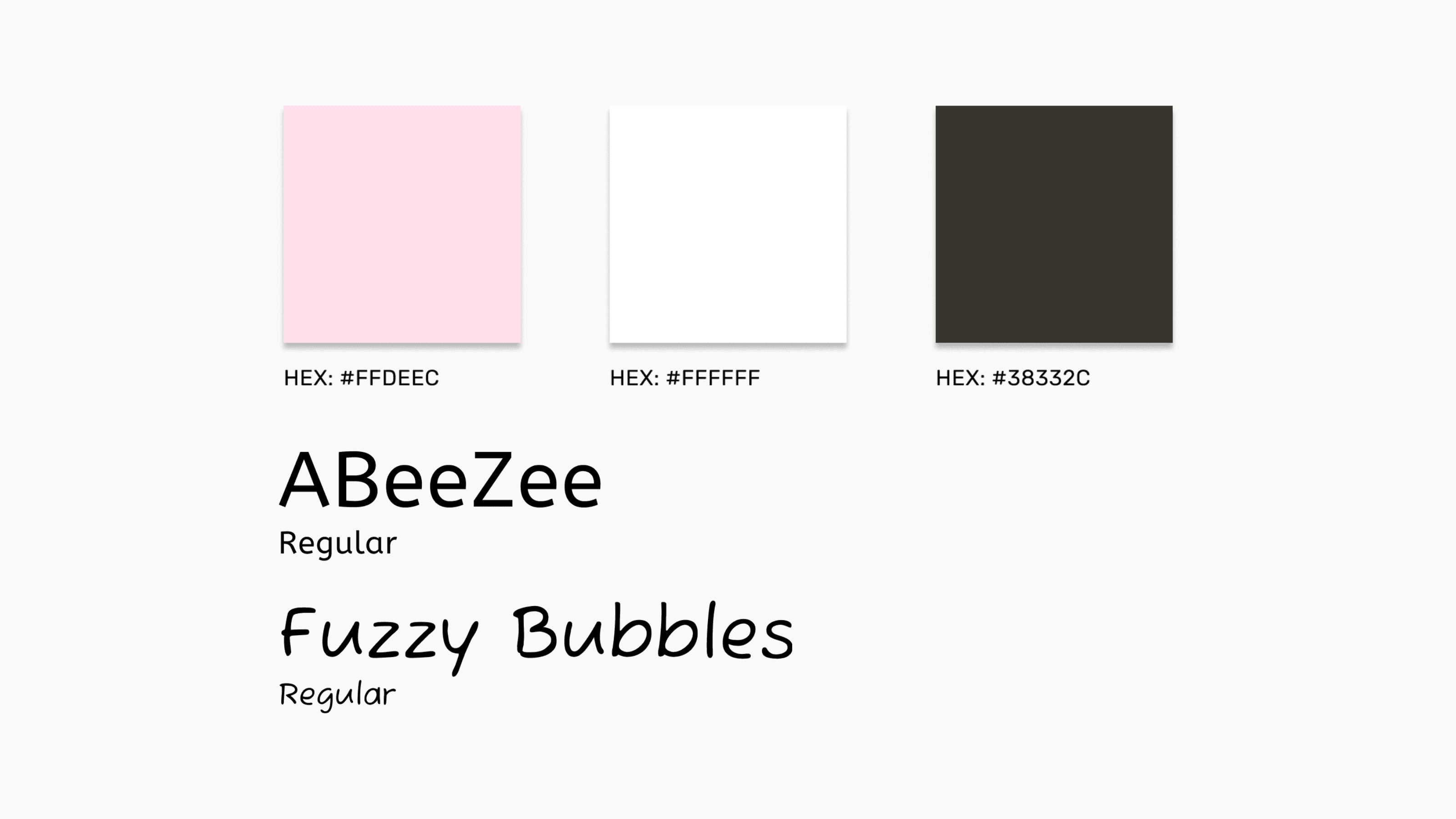
Our team created a style guide with colors and typography that created a soothing, gentle, and warm emotional atmosphere. We wanted users to feel relaxed and inspired by positivity whenever they opened the app, and chose light pink for the primary color to reflect this. Similarly, we selected ABeeZee, a handwriting font, as our primary font used for headings and journal entries to emulate the experience of quickly noting things down in a physical journal.
style guide
Our team created a style guide with colors and typography that created a soothing, gentle, and warm emotional atmosphere. We wanted users to feel relaxed and inspired by positivity whenever they opened the app, and chose light pink for the primary color to reflect this. Similarly, we selected ABeeZee, a handwriting font, as our primary font used for headings and journal entries to emulate the experience of quickly noting things down in a physical journal.
style guide
Our team created a style guide with colors and typography that created a soothing, gentle, and warm emotional atmosphere. We wanted users to feel relaxed and inspired by positivity whenever they opened the app, and chose light pink for the primary color to reflect this. Similarly, we selected ABeeZee, a handwriting font, as our primary font used for headings and journal entries to emulate the experience of quickly noting things down in a physical journal.
style guide
Our team created a style guide with colors and typography that created a soothing, gentle, and warm emotional atmosphere. We wanted users to feel relaxed and inspired by positivity whenever they opened the app, and chose light pink for the primary color to reflect this. Similarly, we selected ABeeZee, a handwriting font, as our primary font used for headings and journal entries to emulate the experience of quickly noting things down in a physical journal.
rapid wireframing
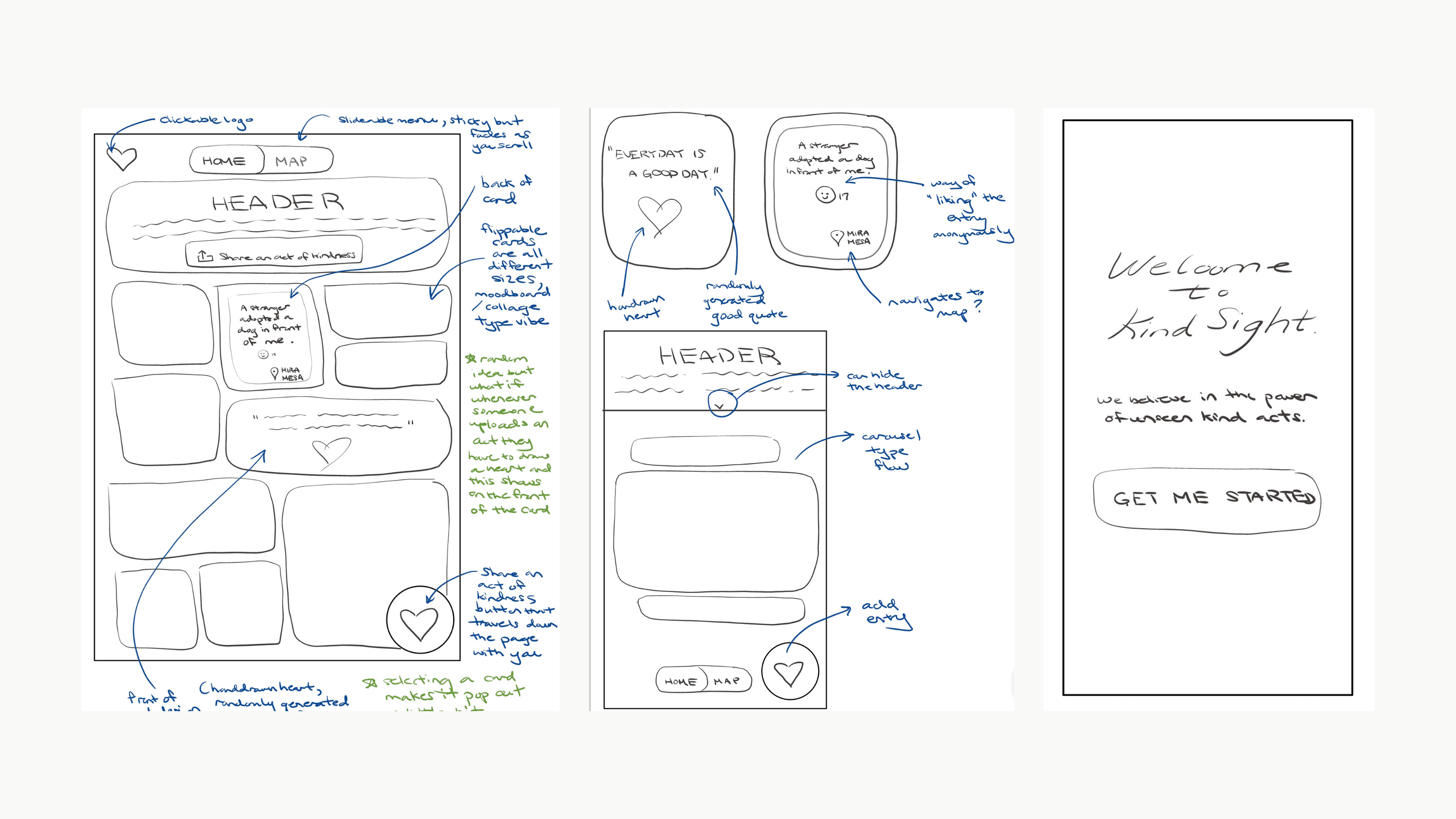
I used a digital drawing tool to ideate on elements of the app, including the card design of each entry that users would see in their feed and the feed layout. I also ideated on a desktop platform version of this app — although this was not prototyped out due to our short timeframe, it provided inspiration for our app design.
rapid wireframing
I used a digital drawing tool to ideate on elements of the app, including the card design of each entry that users would see in their feed and the feed layout. I also ideated on a desktop platform version of this app — although this was not prototyped out due to our short timeframe, it provided inspiration for our app design.
rapid wireframing
I used a digital drawing tool to ideate on elements of the app, including the card design of each entry that users would see in their feed and the feed layout. I also ideated on a desktop platform version of this app — although this was not prototyped out due to our short timeframe, it provided inspiration for our app design.
rapid wireframing
I used a digital drawing tool to ideate on elements of the app, including the card design of each entry that users would see in their feed and the feed layout. I also ideated on a desktop platform version of this app — although this was not prototyped out due to our short timeframe, it provided inspiration for our app design.
03. designing the prototype
04. building the deliverable
03. designing the prototype
final prototype
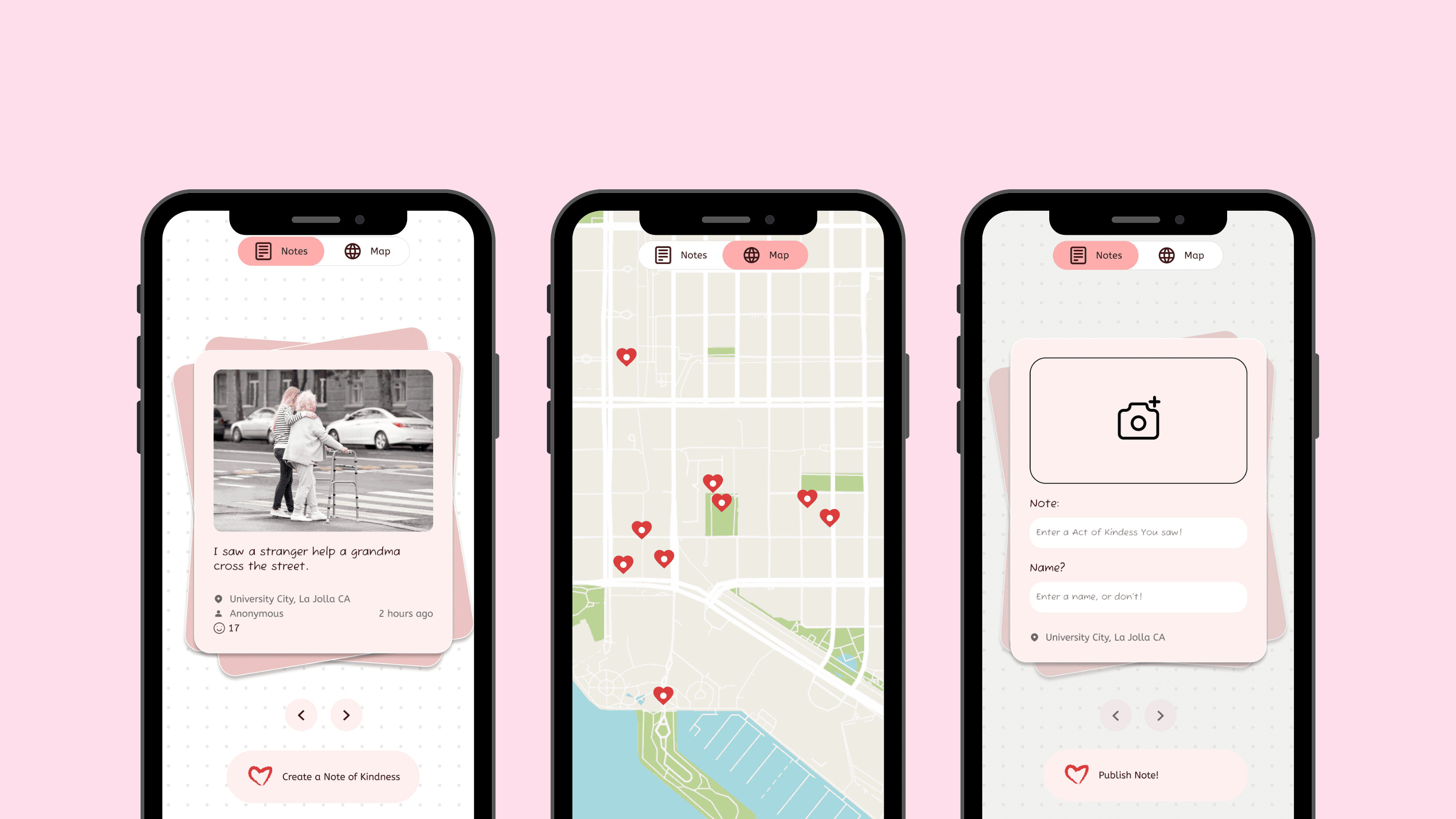
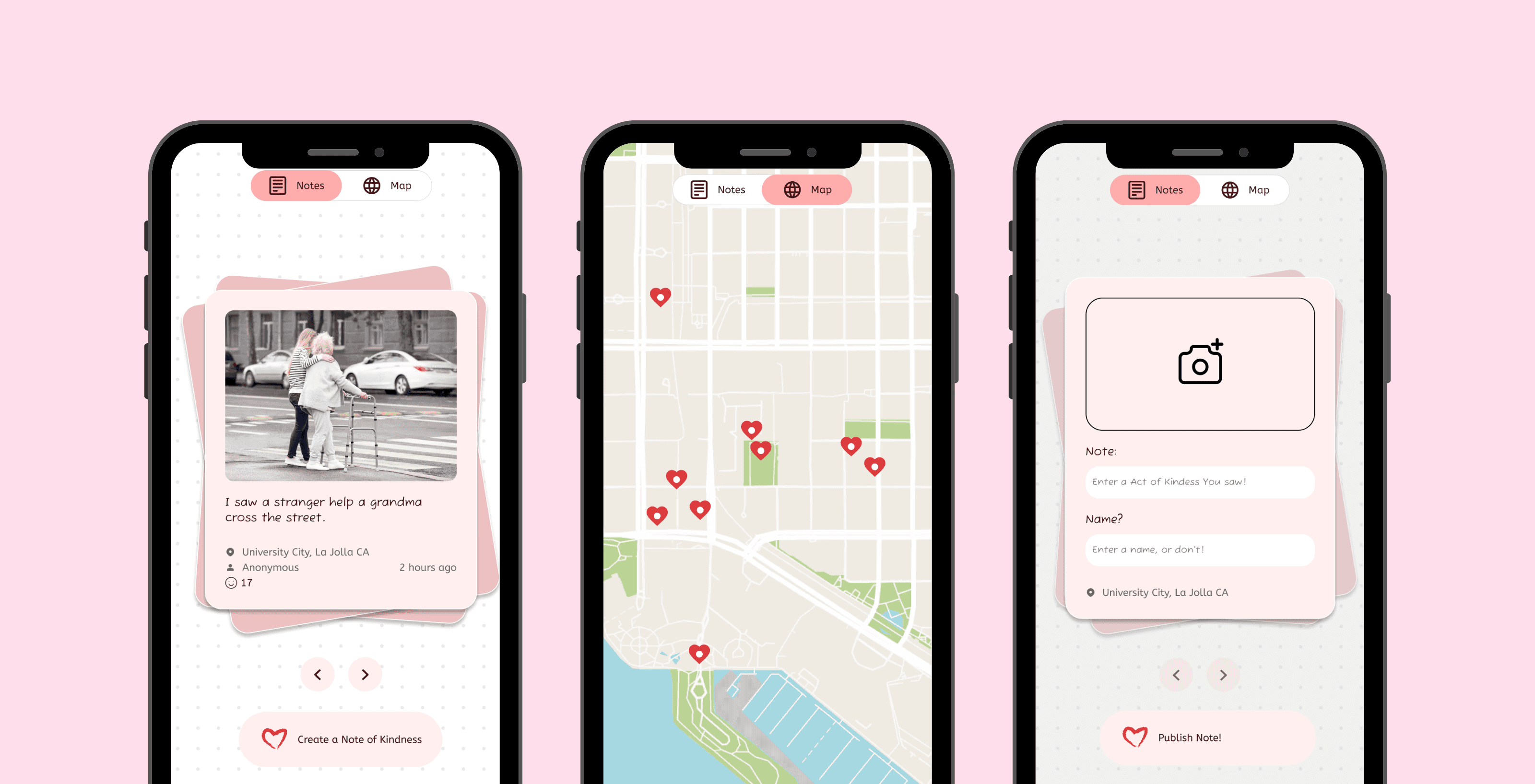
We used Figma to create the final prototype which represents the app’s visual layout and interactive properties if it were fully developed. In short, it is a simple app that spreads positivity with a home feed of local entries describing moments of kindness by anonymous users. There is also a Map tab that shows dropped pins based off of where users submitted from.
Feel free to explore our prototype here!
final prototype
We used Figma to create the final prototype which represents the app’s visual layout and interactive properties if it were fully developed. In short, it is a simple app that spreads positivity with a home feed of local entries describing moments of kindness by anonymous users. There is also a Map tab that shows dropped pins based off of where users submitted from.
Feel free to explore our prototype here!
final prototype
We used Figma to create the final prototype which represents the app’s visual layout and interactive properties if it were fully developed. In short, it is a simple app that spreads positivity with a home feed of local entries describing moments of kindness by anonymous users. There is also a Map tab that shows dropped pins based off of where users submitted from.
Feel free to explore our prototype here!
final prototype
We used Figma to create the final prototype which represents the app’s visual layout and interactive properties if it were fully developed. In short, it is a simple app that spreads positivity with a home feed of local entries describing moments of kindness by anonymous users. There is also a Map tab that shows dropped pins based off of where users submitted from.
Feel free to explore our prototype here!
04. final thoughts
05. final thoughts
04. final thoughts
key outcomes
KindSight offers a concrete way to make a user’s day better by providing a simple, anonymous social media feed with only positivity. Any user can share a moment where they experienced, witnessed, or acted out of kindness, and this moment will be randomized on other users’ feeds.
There is no way to save any particular moment of kindness or to comment on other submissions, in order to simplify the experience and encourage the user to live in the moment. The only possible interaction any user can have with another submission is “Sending A Smile”, which adds to any given post’s current amount of Smiles. This way of reaction is completely anonymous, and can neither be viewed by the author of the post or the user giving the Smile.
next steps and impact
To scale the project beyond the Designathon, we could expand the app beyond San Diego. While our current focus is on San Diego, the app's model could adapt to other cities with localized kindness maps, encouraging users to contribute in their own neighborhoods. This would require more detailed user research of other areas.
reflections
Through this Designathon, we learned that a valuable product stems from a clear, human-centered problem statement that is focused and attainable. To begin with, our team experienced a challenge in determining the scope of our project to be specific enough so that our project would have measurable impact, but also attainable in the limited timeframe that we are given. We initially aimed to address broader issues like food-related misinformation on social media. While important, this topic became too complex for the time constraints. By narrowing our scope to encouraging and documenting acts of kindness, we were able to design an experience that is meaningful, uplifting, and realistically executable. Once our team was aligned on the problem statement and our vision for the solution, we were able to make intentional design choices with confidence.
This was my first Designathon, as well as the other two team members, and we’re proud of successfully creating a meaningful, well-scoped concept with a clear interface. Our app is simple, but it answers the Designathon prompt of promoting well-being in the modern age in a sincere and innovative way.
key outcomes
KindSight offers a concrete way to make a user’s day better by providing a simple, anonymous social media feed with only positivity. Any user can share a moment where they experienced, witnessed, or acted out of kindness, and this moment will be randomized on other users’ feeds.
There is no way to save any particular moment of kindness or to comment on other submissions, in order to simplify the experience and encourage the user to live in the moment. The only possible interaction any user can have with another submission is “Sending A Smile”, which adds to any given post’s current amount of Smiles. This way of reaction is completely anonymous, and can neither be viewed by the author of the post or the user giving the Smile.
next steps and impact
To scale the project beyond the Designathon, we could expand the app beyond San Diego. While our current focus is on San Diego, the app's model could adapt to other cities with localized kindness maps, encouraging users to contribute in their own neighborhoods. This would require more detailed user research of other areas.
reflections
Through this Designathon, we learned that a valuable product stems from a clear, human-centered problem statement that is focused and attainable. To begin with, our team experienced a challenge in determining the scope of our project to be specific enough so that our project would have measurable impact, but also attainable in the limited timeframe that we are given. We initially aimed to address broader issues like food-related misinformation on social media. While important, this topic became too complex for the time constraints. By narrowing our scope to encouraging and documenting acts of kindness, we were able to design an experience that is meaningful, uplifting, and realistically executable. Once our team was aligned on the problem statement and our vision for the solution, we were able to make intentional design choices with confidence.
This was my first Designathon, as well as the other two team members, and we’re proud of successfully creating a meaningful, well-scoped concept with a clear interface. Our app is simple, but it answers the Designathon prompt of promoting well-being in the modern age in a sincere and innovative way.
key outcomes
KindSight offers a concrete way to make a user’s day better by providing a simple, anonymous social media feed with only positivity. Any user can share a moment where they experienced, witnessed, or acted out of kindness, and this moment will be randomized on other users’ feeds.
There is no way to save any particular moment of kindness or to comment on other submissions, in order to simplify the experience and encourage the user to live in the moment. The only possible interaction any user can have with another submission is “Sending A Smile”, which adds to any given post’s current amount of Smiles. This way of reaction is completely anonymous, and can neither be viewed by the author of the post or the user giving the Smile.
next steps and impact
To scale the project beyond the Designathon, we could expand the app beyond San Diego. While our current focus is on San Diego, the app's model could adapt to other cities with localized kindness maps, encouraging users to contribute in their own neighborhoods. This would require more detailed user research of other areas.
reflections
Through this Designathon, we learned that a valuable product stems from a clear, human-centered problem statement that is focused and attainable. To begin with, our team experienced a challenge in determining the scope of our project to be specific enough so that our project would have measurable impact, but also attainable in the limited timeframe that we are given. We initially aimed to address broader issues like food-related misinformation on social media. While important, this topic became too complex for the time constraints. By narrowing our scope to encouraging and documenting acts of kindness, we were able to design an experience that is meaningful, uplifting, and realistically executable. Once our team was aligned on the problem statement and our vision for the solution, we were able to make intentional design choices with confidence.
This was my first Designathon, as well as the other two team members, and we’re proud of successfully creating a meaningful, well-scoped concept with a clear interface. Our app is simple, but it answers the Designathon prompt of promoting well-being in the modern age in a sincere and innovative way.
key outcomes
KindSight offers a concrete way to make a user’s day better by providing a simple, anonymous social media feed with only positivity. Any user can share a moment where they experienced, witnessed, or acted out of kindness, and this moment will be randomized on other users’ feeds.
There is no way to save any particular moment of kindness or to comment on other submissions, in order to simplify the experience and encourage the user to live in the moment. The only possible interaction any user can have with another submission is “Sending A Smile”, which adds to any given post’s current amount of Smiles. This way of reaction is completely anonymous, and can neither be viewed by the author of the post or the user giving the Smile.
next steps and impact
To scale the project beyond the Designathon, we could expand the app beyond San Diego. While our current focus is on San Diego, the app's model could adapt to other cities with localized kindness maps, encouraging users to contribute in their own neighborhoods. This would require more detailed user research of other areas.
reflections
Through this Designathon, we learned that a valuable product stems from a clear, human-centered problem statement that is focused and attainable. To begin with, our team experienced a challenge in determining the scope of our project to be specific enough so that our project would have measurable impact, but also attainable in the limited timeframe that we are given. We initially aimed to address broader issues like food-related misinformation on social media. While important, this topic became too complex for the time constraints. By narrowing our scope to encouraging and documenting acts of kindness, we were able to design an experience that is meaningful, uplifting, and realistically executable. Once our team was aligned on the problem statement and our vision for the solution, we were able to make intentional design choices with confidence.
This was my first Designathon, as well as the other two team members, and we’re proud of successfully creating a meaningful, well-scoped concept with a clear interface. Our app is simple, but it answers the Designathon prompt of promoting well-being in the modern age in a sincere and innovative way.
Recognition
Recognition
Received third place in 2025 UCSD DesignCo Designathon
Received third place in 2025 UCSD DesignCo Designathon
the team!
the team!
Alice Guo
Jaythen Peralta
Renato Pimento
Alice Guo
Jaythen Peralta
Renato Pimento
Alice Guo
Jaythen Peralta
Renato Pimento
the team